Warm Wishes: Greetings & Cards
- 4.5
- Rating
- 50.00K
- Installs
- Free
- Price

 Analysis by App-foxy
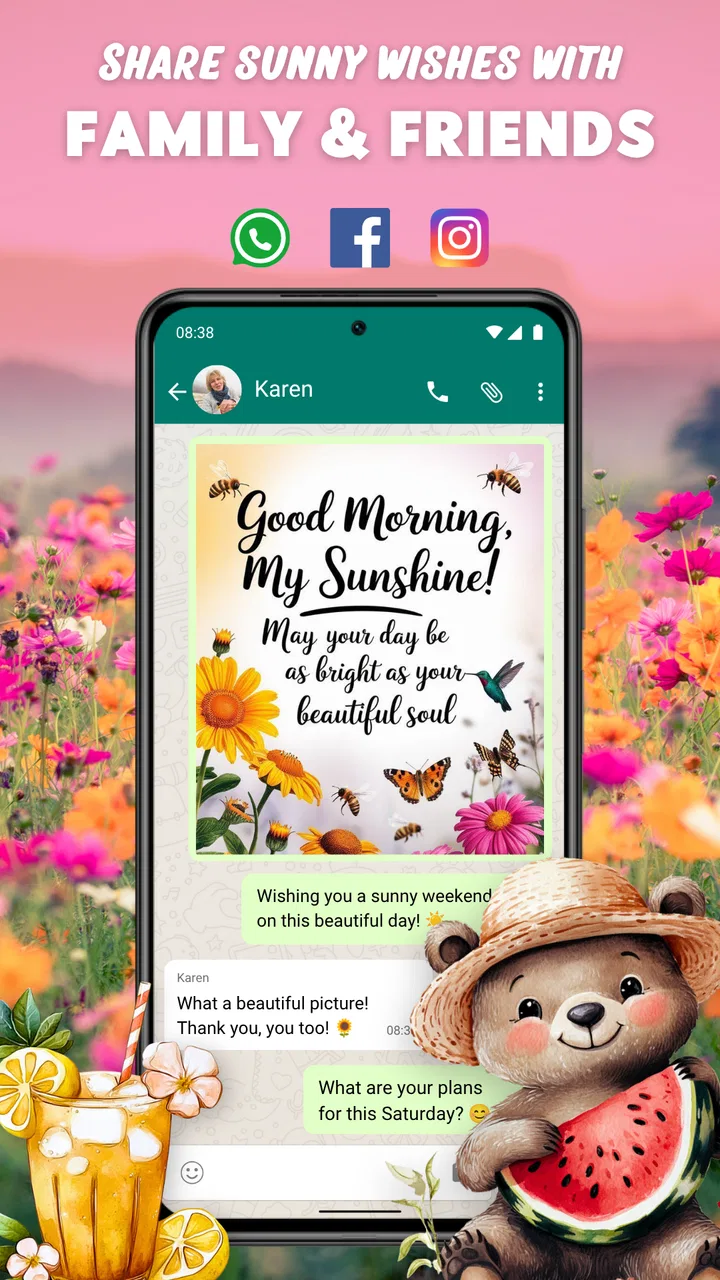
I approached Warm Wishes: Greetings & Cards as a practical lifestyle app rather than a tool I would open every day. Its purpose is simple: help me send a thoughtful-looking card when I want to mark a birthday, share affection, say good night, or brighten someone’s day without designing an image from scratch. That narrow focus is also its main appeal. I do not need to search through social networks, edit a photo in a separate app, or write a message from a blank screen before sending something warm.
The app is free to download, carries an Everyone age rating, and comes from good space. Sprüche & Bilder zum Verschicken. It has reached over 10 thousand installs and holds a 4.6 average from around 36 ratings, which gives it a positive early signal without making it feel like a universally proven platform. I would describe it as a convenient collection of ready-to-share greeting cards, especially useful for people who value speed and visual presentation more than deep customization.
What using the greeting collection feels like
The first thing I noticed is that the experience is built around choosing the right emotional moment. Birthday wishes, love messages, good night greetings, and similar occasions are much easier to handle when the app puts the sentiment before the editing process. Instead of asking me to create a design, it encourages me to recognize the occasion, select a suitable card, and pass it along.
You May Also Like

 Pandora - Music & Podcasts
Pandora’s Music Is Easy to Start, but Harder to Recover
Pandora’s strength is its low-effort path from a seed to a station. Its weak spot is how much confidence it asks you to place in connection, setup, and quiet recovery.

 AccuWeather: Weather Radar
AccuWeather Review: A Quick, Clear Forecast for Everyday Decisions
For everyday plans, the best forecast is the one you can understand quickly. AccuWeather makes rain timing, radar, and local conditions easy to act on, with a few trade-offs.

 Hill Climb Racing
Why Hill Climb Racing Still Turns Crashes Into One More Run
A tiny car, a bumpy hill and one more upgrade: Hill Climb Racing keeps resurfacing because its simple chaos makes every near-miss feel personal.

 AliExpress - Shopping App
AliExpress Makes Global Shopping Feel Personal, but Shoppers Bear the Risk
AliExpress turns a global marketplace into a pocket-sized discovery engine. Its reach is useful, its shopping loop compelling, and its trade-offs easy to miss.

 Lords Mobile: Kingdom Wars
Lords Mobile Is a Kingdom-Building Routine, Not a Quick Match
A case-by-case verdict on the building, battles, device demands, and social commitments that make Lords Mobile rewarding for some players and exhausting for others.

 PDF Scanner app - TapScanner
TapScanner Makes Paperwork Easier to Capture, Check, and Share
TapScanner makes scanning with a phone feel less like a rescue operation and more like a dependable step in getting work done. Its capture tools are useful, though not flawless.
More From Our News Desk
View All News


That workflow works well in ordinary situations. Imagine remembering a friend’s birthday during a busy lunch break. I might not have time to compose a personal paragraph, find a fitting background, and adjust text alignment. A ready-made card lets me acknowledge the person quickly, while I can still add a short personal note in the messaging app I use afterward. In that situation, the app is not replacing friendship; it removes the small piece of friction that can otherwise lead to sending nothing.
I also found the format useful for recurring moments that are easy to overlook. A good-night image can feel more deliberate than a plain “sleep well” message, while a love-themed card may help when I want a visual gesture rather than another block of text. The important distinction is that these cards are prompts and presentation aids. The emotional value still depends on choosing something that fits the recipient instead of forwarding the first attractive image I see.
The developer’s focus on sayings and pictures gives the app a clear identity. It is not trying to become a full social network, a photo editor, or a private diary. That specialization makes the basic purpose easy to understand, although it also means people looking for extensive design controls may find the experience limited compared with a general graphics app.
Where it saves time, and where it does not
The strongest part of the concept is the shortcut from intention to action. When I already know the kind of message I want to send, browsing a prepared selection is faster than building a card manually. This is particularly helpful for users who are not comfortable with visual design or who dislike writing sentimental messages from scratch.
There is a trade-off, though. A prewritten greeting can sometimes sound less personal than a message written in my own words. I would not use a card as the entire message for a close family member if the occasion deserves a detailed note. My preferred workflow is to use the image as the opening gesture, then add one specific sentence about the person, the shared memory, or the reason I am thinking of them. That small addition makes a generic format feel much more intentional.
Another practical point is timing. The app helps me prepare a greeting, but it should not be treated as a replacement for checking the recipient, the occasion, or the wording before sharing. A warm phrase that is perfect for a partner may feel awkward when sent to a colleague. Browsing by emotion rather than by relationship can create that mismatch, so I take a moment to consider the audience before tapping send.
Trust starts with visible choices
For an app that deals with personal communication, I pay attention to what I can see and control rather than assuming that convenience automatically equals privacy. The available product information identifies the app as a free lifestyle utility with greeting cards and messages, but it does not give me a reason to treat it as a private messaging service. I therefore use it as a card-selection tool and make my sharing decision in the destination app.
That separation matters. A greeting may include affectionate wording, a birthday reference, or an image chosen for a particular person. Before sharing, I check whether the chosen card reveals more than I intended, especially when the recipient is part of a work group or a family conversation. A card that makes sense in a one-to-one chat may look out of place in a group.
I also avoid treating the app as a place to store sensitive personal material. I would not use a greeting card to communicate passwords, private addresses, financial details, or anything that needs confidentiality. The app’s value is in expressing a feeling, not in protecting important information. That is a simple boundary, but it is one I would recommend to anyone deciding whether a lightweight sharing app belongs in their routine.
The app’s Everyone rating makes it approachable for a broad audience, including families choosing a straightforward way to send greetings. Still, an age label should not replace judgment. Adults should help younger users understand that sharing an image is an outward action and that the recipient, the wording, and the conversation context all matter. The safest experience comes from using the app for ordinary, non-sensitive wishes and reviewing each card before sending it.
Permissions, accounts, and what I would verify first
I do not infer privacy protections from the app’s friendly subject matter. When I install it, I look at the permission prompts that actually appear and grant only what is needed for the action I am trying to perform. If I only want to browse cards, I do not see a reason to approve an unrelated request. If I choose to share an image through another application, I review the system’s visible sharing options rather than assuming every installed service should receive access.
The same cautious approach applies to account controls. I prefer to use an app in the simplest available way and avoid entering personal information unless the app clearly requires it for a function I genuinely want. The confirmed product details do not establish that an account is necessary, so I would not promise readers that account-free use, deletion tools, or a particular sign-in method exists. Instead, I recommend checking the screens shown during setup and using the controls the device presents.
This is not a criticism unique to Warm Wishes. It is a sensible habit for any app that helps prepare content for sharing. A person can enjoy the cards while still keeping control over contacts, photos, and outgoing messages. I consider that separation a positive user practice, even when the app itself is deliberately simple.
The current version is 5.15.7 and supports devices running Android 7.1 or later. That broad compatibility is useful for people who keep an older phone, but I would still install it through the official store on the device and review the permission dialog after installation. Version information tells me what release I am receiving; it does not, by itself, answer every question about data handling or account management.
Free access and the point where payment enters
The app is free, which makes it easy to try without committing money first. There are in-app purchases ranging from about two dollars to nearly forty dollars per item. That range is important because “free” describes the starting point, not necessarily every available card, collection, or convenience inside the experience. I would browse carefully and decide whether the free selection already meets my needs before paying for anything.
My advice is to treat the purchase screen as a moment for deliberate choice, not as part of the emotional pressure of an occasion. If I am looking for a birthday image at the last minute, I am more likely to tap quickly. Instead, I check what I am receiving, whether it is useful beyond one occasion, and whether I would still want it after the immediate need has passed. Device-level purchase confirmation is worth keeping enabled, particularly on a shared phone.
The pricing structure may suit someone who sends cards often and wants more variety, but it is less attractive to a person who only needs an occasional greeting. For occasional use, a free card plus a personal sentence may be enough. For frequent senders, paying could make sense only if the extra material consistently matches their relationships and occasions. I would not buy simply because a card looks more polished than the alternatives.
Compared with a general design platform, the advantage here is reduced effort. A design platform may offer stronger control over fonts, layouts, photos, and branding, but it asks me to make more decisions. Compared with a messaging app’s built-in stickers or GIFs, Warm Wishes may feel more focused and greeting-oriented, while the messaging app is usually faster when I already have a suitable reaction ready. The right choice depends on whether I want a finished card, a custom composition, or a quick conversational response.
Three workflows that make the app more useful
My first useful workflow is to separate selection from personalization. I choose a card based on the recipient and occasion, then write a short message outside the image. This avoids forcing a single card to carry the whole relationship. Even a sentence such as “I hope today gives you a quiet moment for yourself” can make a prepared greeting feel less automatic.
Second, I use emotional categories as a starting point rather than a final decision. A card marked by affection may be appropriate for a partner, but a close friend might respond better to something playful or understated. I look at the actual wording, not just the category, because the tone of the picture and the sentence may communicate more intensity than I intended.
Third, I review the sharing destination before sending. I check whether I am in a private chat, a family group, or a work conversation, and I confirm the recipient’s name. This is especially valuable when a card is being selected quickly. A visually attractive greeting can still become embarrassing if it goes to the wrong person or the wrong group.
A fourth habit is to save the app for moments where a visual gesture adds something. If I send a decorated card for every tiny exchange, it can become background noise. I would use it for birthdays, encouragement, affectionate check-ins, and good-night messages when the image helps express a mood that plain text would not capture as well.
Who should use it, and who should skip it
I would recommend Warm Wishes to someone who regularly forgets special occasions, dislikes designing images, or wants a quick way to make a short message look more considered. It is also a reasonable choice for relatives who are comfortable with basic sharing but do not want to learn a complex editing suite. The Everyone rating and simple lifestyle focus make the concept easy to explain to a family member.
I would be more cautious about recommending it to a professional creator, a small business owner needing branded graphics, or anyone who expects detailed control over every visual element. A general design application will usually be a better fit for logos, consistent typography, original photography, and carefully edited campaigns. Someone who values completely original wording may also prefer writing directly in a messaging app.
Privacy-conscious users should make their own decision after reading the permission prompts and any visible privacy information on the device or store page. I would not describe this app as a secure channel for confidential communication. Its role is preparing a greeting for sharing, and I would keep personal data out of both the card and any optional fields unless I understand why they are needed.
People who dislike in-app purchases should also decide in advance whether they are willing to stay with the free material. The free starting price is appealing, but the presence of paid items means I would not hand the phone to a child without purchase protections. That is not a reason to reject the app; it is simply part of using a free catalog with optional paid content responsibly.
My cautious verdict after weighing convenience against control
Warm Wishes: Greetings & Cards succeeds because it understands a small but real problem: sometimes I want to send something warmer than plain text, but I do not want to spend time designing it. The focused collection, free entry point, and broad device support make it approachable. Its positive 4.6 average and more than 10 thousand installs suggest that the straightforward idea is connecting with users, although I would still judge it by my own preferred occasions and the quality of the cards I can actually use.
My recommendation comes with a clear condition: use the app as a source of visual prompts, not as a substitute for personal attention or careful sharing. Add a sentence when the relationship deserves it, inspect the recipient before sending, and keep sensitive information out of greeting content. I would also review permission requests, account screens, and purchase confirmations directly on my device instead of assuming that a friendly lifestyle category answers those questions.
For me, the app is most worthwhile when speed and warmth need to coexist. It is less compelling when I need originality, detailed editing, private communication, or a fully free experience with no paid options. If those limits fit your expectations, this is an easy tool to keep available for birthdays, affection, encouragement, and good-night messages. The best result comes from using its ready-made card as the beginning of a personal message, not the whole message.
FAQs for Warm Wishes: Greetings & Cards
01What features does Warm Wishes: Greetings & Cards offer?
Warm Wishes: Greetings & Cards provides a vast collection of customizable templates for various occasions such as birthdays, anniversaries, and holidays. Users can personalize cards with unique messages, photos, and stickers. The app also offers scheduling features to send cards at specific times and reminders for upcoming events.
02Is Warm Wishes: Greetings & Cards available on both Android and iOS?
Yes, Warm Wishes: Greetings & Cards is available for download on both Android and iOS platforms. You can find it in the Google Play Store for Android devices and the Apple App Store for iOS devices. Ensure your device meets the app’s system requirements before downloading.
03Are there any costs associated with using Warm Wishes: Greetings & Cards?
While Warm Wishes offers a variety of free features, there may be additional premium options available for purchase. These might include exclusive card designs, advanced customization tools, and an ad-free experience. Users can choose to make in-app purchases to enhance their card creation experience.
04How user-friendly is Warm Wishes: Greetings & Cards for beginners?
Warm Wishes: Greetings & Cards is designed with an intuitive interface that caters to users of all experience levels. The app guides users through the card creation process step-by-step, making it easy for beginners to create beautiful and personalized greetings without any prior design skills.
05Does Warm Wishes: Greetings & Cards require an internet connection?
Warm Wishes: Greetings & Cards requires an internet connection for downloading new templates and sending cards via email or social media. However, users can create and save cards offline. Once connected to the internet, saved cards can be sent or shared across platforms.
Pros
- User-friendly interface
- easy to navigate.
- Wide variety of card designs available.
- Customizable text and images.
- Regularly updated with new templates.
- Supports multiple languages for greetings.
Cons
- Limited free features
- many require purchase.
- Occasional crashes on older devices.
- Ads can interrupt the user experience.
- Some templates lack personalization options.
- Requires internet for most functionalities.

Warm Wishes: Greetings & Cards
Gallery